
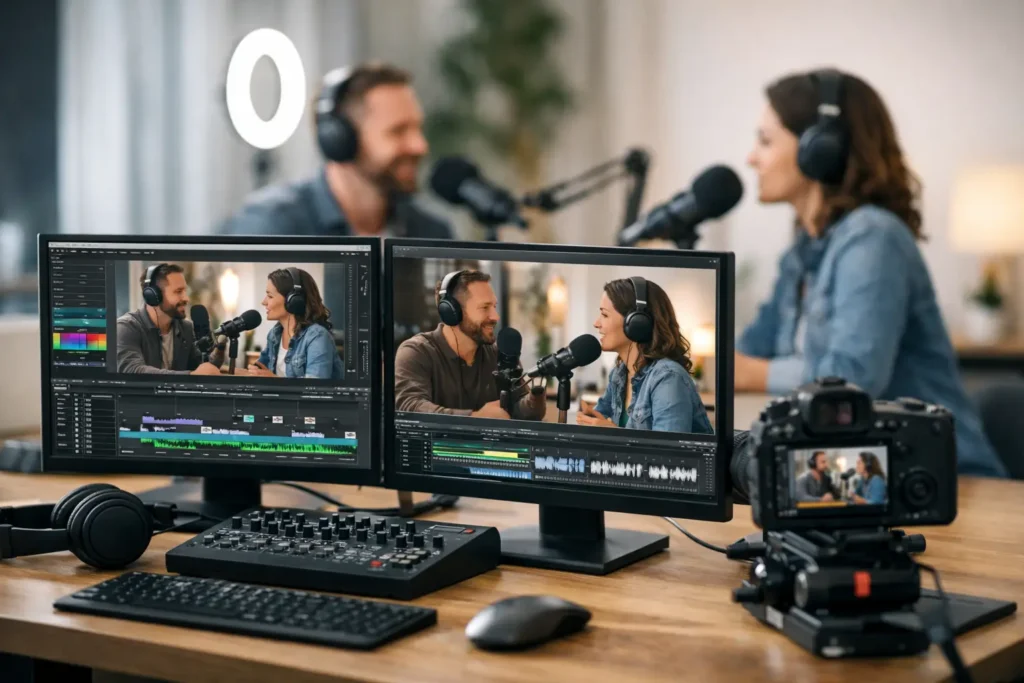
A strong podcast conversation can lose momentum fast when the final video has distracting pauses, uneven audio, awkward framing, or no clear way for viewers to follow along. For busy business owners, the recording is often the easy part. Turning it into content that looks credible on YouTube, social media, and your website is where podcast video editing services make a practical difference.
A polished podcast does more than make your brand look professional. It gives customers a chance to hear your expertise in your own voice, understand how you solve problems, and spend more time with your business before they ever call, visit, or request a quote. The right editing process helps your team make the most of every recording without adding another time-consuming task to your week.
What Podcast Video Editing Services Should Do for Your Business
Podcast video editing is not just cutting out mistakes. It is the process of shaping a recorded conversation into useful, watchable marketing content. Depending on your goals, an editor may clean up audio, tighten the pacing, add branded introductions and lower-thirds, incorporate graphics, and format the finished video for the platforms your audience uses.
For a local service business, that might mean editing an interview about common electrical safety issues into a full YouTube episode and several short clips for Facebook or Instagram. For an eCommerce company, it could mean turning a founder conversation into product education, customer stories, and answers to common buying questions.
The value comes from clarity and consistency. Your audience does not expect a Hollywood production. They do expect to hear you clearly, understand the topic, and see a business that takes its communication seriously.
Better pacing keeps attention on your message
Natural conversation includes pauses, restarts, side comments, and moments that work well in the room but do not always work on screen. Thoughtful editing removes the dead space without making speakers sound rushed or overly scripted. The goal is to preserve your personality while respecting the viewer’s time.
A good editor also watches for the moments that carry the most value: a helpful explanation, a surprising statistic, a client question, or a clear opinion. Those sections can become short-form clips that introduce new audiences to your podcast and encourage them to watch the full episode.
Clean audio protects credibility
Viewers will often tolerate an average camera image longer than they will tolerate hard-to-hear audio. Room echo, background noise, inconsistent microphone levels, and overlapping speakers can make useful information difficult to follow.
Editing can reduce distractions, balance voices, remove obvious verbal stumbles, and add captions where appropriate. It cannot fully rescue every recording problem, which is why a simple recording setup and clear microphone practices still matter. A good service partner will help your team improve both the recording process and the final product over time.
Why Video Podcasts Work for Small Businesses
A podcast gives your business room to say more than a typical social post or advertisement allows. You can explain your process, address misconceptions, interview partners, discuss local issues, and show the people behind the business. This is especially useful when your services require trust before a customer makes a decision.
Video adds another layer. Facial expressions, demonstrations, screen shares, product close-ups, and guest interaction make the content easier to understand and more engaging to share. It also creates more usable material from one recording session.
One 30-minute episode may support a long-form video, an audio version, several vertical clips, quote graphics, captions, and topic ideas for future website content. That does not mean every episode needs to be repurposed into every possible format. The best approach depends on where your customers spend time and what your team can consistently support.
For example, a business targeting commercial clients may gain more from full educational episodes on YouTube and clips for LinkedIn. A restaurant, retailer, or community-focused business may see stronger engagement from shorter, personality-driven clips on Instagram and Facebook. The format should follow your marketing goals, not a generic content checklist.
What to Look for in Podcast Video Editing Services
The best editing partner understands that your podcast is part of a larger digital presence. They should ask who you are trying to reach, what action you want viewers to take, and how the show fits with your website, social media, search visibility, and sales process.
Editing quality matters, but communication matters just as much. You need a process that makes it easy to send footage, review drafts, request reasonable changes, and know when finished files will be ready. A service built around unclear handoffs can create more work for your team instead of less.
Look for an editor who can explain deliverables in plain language. Before you begin, you should know the expected length of the full episode, the number and format of short clips, whether captions and branded graphics are included, how revisions work, and who owns the final files.
It also helps to discuss brand consistency early. Your colors, logo treatment, music choices, fonts, and on-screen style should feel aligned with your website and other marketing materials. Small details add up. When someone sees a clip in their feed and later visits your site, the experience should feel connected.
Avoid editing for trends alone
Fast cuts, animated captions, and energetic effects can work well for certain shows and platforms. They can also feel forced if they do not match your brand or audience. A financial consultant, healthcare-adjacent business, or engineering firm may need a calmer, more polished visual style than a personality-led retail brand.
Trends are useful when they improve clarity or help your content fit the expectations of a specific platform. They are less useful when they distract from an informed conversation. Your editing style should support the message, not compete with it.
Build a Workflow Your Team Can Maintain
Consistency is more valuable than producing a dozen episodes and stopping. Start with a realistic recording schedule, whether that is weekly, twice a month, or monthly. Choose a format that your team can prepare for without scrambling: solo answers to customer questions, interviews with local experts, behind-the-scenes discussions, or focused conversations about one problem at a time.
Before recording, prepare a simple outline with the episode topic, a few talking points, and a clear next step for viewers. That next step might be calling your business, requesting an estimate, subscribing for future advice, or visiting your website for a related service. A podcast does not need a hard sales pitch, but it should give interested listeners a path forward.
After recording, create a repeatable handoff. Name files consistently, include notes on any section you want highlighted, and provide your editor with current brand assets. This reduces revision time and helps the editing team recognize what matters most to your business.
YoushTech approaches podcast editing as part of your broader digital strategy, not as a file-transfer task. When your video content supports the same goals as your website, SEO, social media, and paid campaigns, each piece has a clearer job to do.
Measure More Than Views
Views are useful, but they do not tell the whole story. A short clip with modest reach may still be successful if it brings the right people to your website or starts meaningful conversations with potential customers. Watch time, comments, shares, profile visits, website traffic, inquiries, and repeat viewers can all reveal whether your podcast is building trust.
Give the content enough time to work. Early episodes often help your team find its voice, refine the recording setup, and learn which questions your audience cares about most. Use those lessons to improve future topics rather than judging the entire effort on one post.
Your expertise is already part of how you serve customers every day. With an editing process built around your goals and capacity, your podcast can turn that expertise into an ongoing reason for people to remember, trust, and choose your business.