
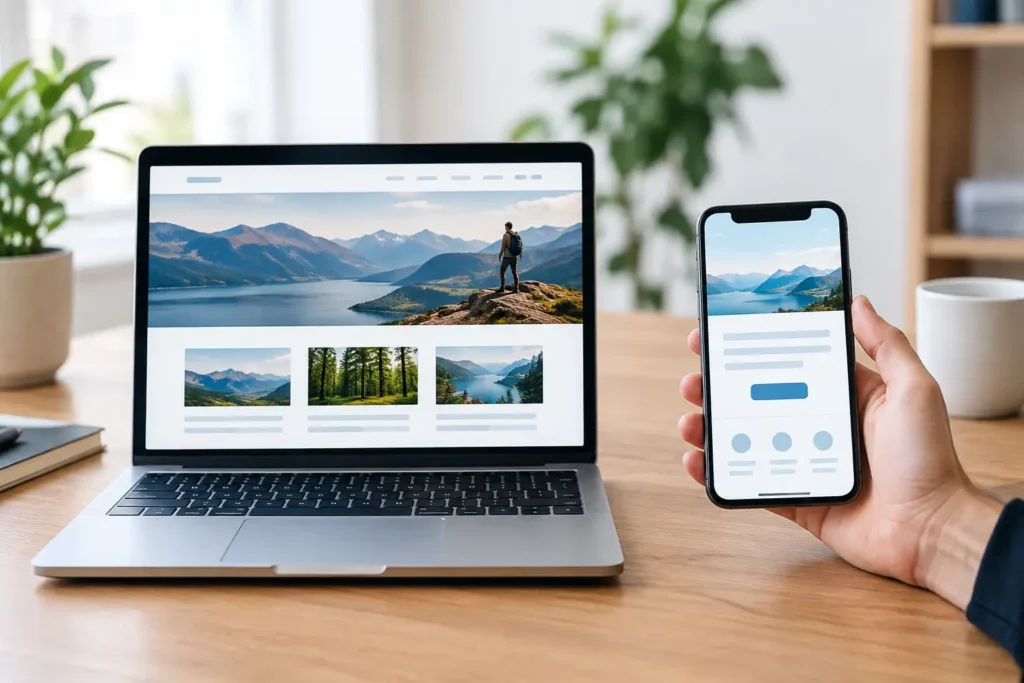
A customer sees your ad for a seasonal service, clicks, and lands on a homepage with six menu options, a company history, and three services to compare. They may be impressed, but they may also leave without calling. That is the practical difference behind landing pages versus websites: one is built to guide a visitor toward one immediate action, while the other gives your business a durable home online.
For Oklahoma City small businesses and growing companies everywhere, this is not usually an either-or decision. A website establishes credibility, helps customers find you through search, and supports your business over time. A landing page gives a specific campaign, offer, or audience a focused place to convert. Knowing when to use each helps your marketing dollars work harder.
What Is a Website?
A website is your business’s central digital presence. It gives customers a place to learn who you are, what you offer, where you operate, and how to get in touch. For many businesses, it also supports appointment requests, online sales, service-area information, testimonials, blog content, and frequently asked questions.
Think of it as the foundation of your digital operations. Someone searching for an electrician, a local retailer, an engineering firm, or a specialized service provider needs more than a catchy offer. They want enough information to feel confident choosing your team. A professional website answers those questions before the prospect ever reaches out.
A strong small-business website commonly includes a homepage, individual service or product pages, an about page, contact details, and pages that address the locations you serve. The exact structure should reflect how customers make decisions in your industry. A local door service company may need clear emergency-service information, while an eCommerce business needs product categories, secure checkout, and customer support details.
Where websites do their best work
Websites are especially valuable for building long-term visibility in search engines. Search engine optimization relies on helpful, relevant pages that explain your services and demonstrate your expertise. A single page can rank for a narrow topic, but a well-organized site gives search engines and customers a fuller picture of your business.
Your website is also where customers often go after hearing about you elsewhere. They may find you through a social media post, referral, podcast appearance, Google search, or paid ad, then visit your site to verify that you are established and professional. If that visit creates confidence, your other marketing efforts become more effective.
The trade-off is that websites have more paths. That is useful when a visitor is researching, but it can dilute attention when you want someone to take one specific action right now.
What Is a Landing Page?
A landing page is a standalone page designed around one campaign goal. It removes unnecessary choices and gives visitors a clear next step, such as requesting an estimate, booking a consultation, claiming an offer, registering for an event, downloading a guide, or buying one product.
Instead of asking visitors to explore your whole business, a landing page meets them with a message that matches what brought them there. If someone clicks an ad for a free technology assessment, they should see a page about that assessment – not a general homepage that makes them search for it.
The most effective landing pages are specific. They explain the benefit, address likely concerns, provide proof such as reviews or relevant results, and repeat a clear call to action. They are not necessarily short. A higher-cost or more complex service may require more detail before a visitor is ready to submit a form or call.
Where landing pages do their best work
Landing pages are a smart fit for paid digital campaigns because they make campaign performance easier to measure. When every visitor arrives from an ad promoting one service, you can see whether the page is generating leads and where prospects may be dropping off.
They also work well for time-sensitive promotions and tightly defined audiences. Examples include a spring HVAC tune-up offer, a new patient special, a consultation for businesses that need a website refresh, or a registration page for a local workshop. Each campaign can have its own message, audience, and conversion goal.
The limitation is that a landing page is not a replacement for a complete online presence. A prospect who wants to compare services, learn about your company, review your credentials, or browse products may need more than one focused page can provide.
Landing Pages Versus Websites: The Key Differences
The biggest difference is purpose. A website supports the full customer journey. A landing page supports one moment in that journey.
A website usually has navigation that lets visitors move among pages. A landing page often limits or removes navigation so visitors remain focused on the campaign’s next step. A website may speak to several customer types and describe multiple services. A landing page should speak directly to the person who clicked a particular ad, email, or social post.
Their success metrics differ, too. Website performance can be measured through search visibility, engaged visitors, contact requests, online purchases, and how easily customers find the information they need. Landing page performance centers more tightly on conversion rate: how many visitors complete the intended action.
Neither format automatically produces results. A beautifully designed page with an unclear offer will underperform. A detailed website with slow load times, weak calls to action, or outdated information can also cost your business opportunities. Strategy, messaging, technical performance, and follow-up matter as much as the page type.
When Your Business Needs a Website First
If your business has no professional web presence, an outdated site, or only a social media profile, build the website first. Customers expect to find basic details quickly: your services, phone number, location or service area, hours, experience, and a credible way to contact you.
A website should also come first when your business relies on organic search. If you want to appear when people search for your services in Oklahoma City or surrounding communities, you need useful pages that align with those searches. This takes time, but it creates an asset that can keep attracting qualified visitors beyond a single campaign.
Website-first is also the right choice when customers have longer decision cycles. Businesses selling professional services, specialized products, or high-value projects need room to establish trust. Clear service pages, case examples, testimonials, and educational content can help visitors move from curiosity to confidence.
When a Landing Page Is the Better Next Step
Choose a landing page when you have a defined offer and a clear source of traffic. That traffic might come from Google Ads, social media advertising, an email campaign, a QR code on print materials, or a podcast promotion. The more targeted the campaign, the more valuable a focused destination becomes.
For example, an Oklahoma City contractor running ads for storm-damage inspections should not send clicks to a general homepage. A dedicated page can explain the inspection, identify the service area, show proof of experience, and make calling or requesting an appointment simple.
Landing pages are also useful for testing. You can compare two headlines, offers, or calls to action to learn what resonates with a particular audience. The results can improve future ads, emails, and even the main website. Just make sure you allow enough traffic and time to make decisions based on real patterns rather than a handful of visits.
The Strongest Approach Usually Uses Both
Your website and landing pages should work together rather than compete. The website establishes your brand, supports search visibility, and gives interested prospects the depth they need. Landing pages turn campaign attention into a focused next step.
Start by mapping the path your customer takes. Where do they first hear about you? What question do they need answered before contacting you? What action would represent a meaningful lead or sale? A thoughtful plan may send search traffic to service pages, paid campaign traffic to landing pages, and returning visitors to content that reinforces trust.
Consistency matters. Your ads, social posts, emails, landing pages, and website should use the same core message without repeating the exact same copy everywhere. If an ad promises a free consultation, the page should make that offer easy to understand and easy to claim. If your website emphasizes personalized service, every touchpoint should support that promise.
Build for the Customer You Want to Serve
The right choice depends on your goal, budget, traffic source, and how your customers make decisions. A website without focused conversion paths can become a digital brochure. A landing page without a credible business behind it can feel incomplete. Together, they can give your team both a strong foundation and a practical way to turn attention into action.
If you are unsure where your current online presence is losing potential customers, begin with the customer journey rather than the technology. A clear look at how people find, evaluate, and contact your business will point your next digital investment in the right direction.