
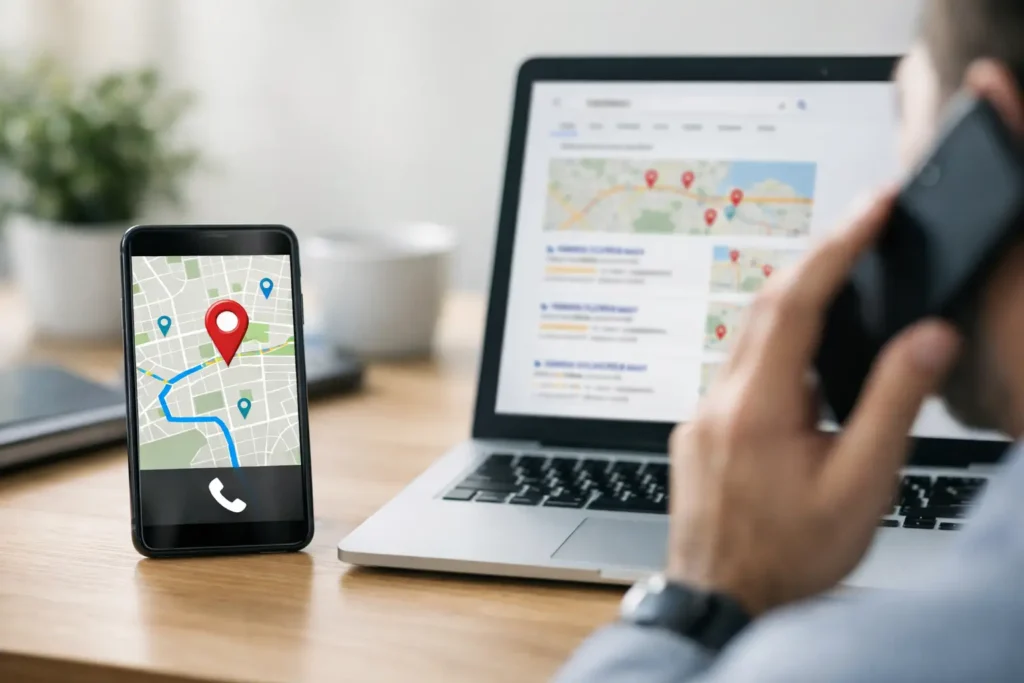
When a homeowner needs an electrician, a business needs a door repair company, or a patient searches for a nearby service provider, they rarely begin with a broad national search. They look for a trusted option close to them. Local SEO for service businesses helps your company show up at that exact moment – with accurate information, a credible online presence, and a clear reason to contact your team.
For Oklahoma City businesses, local visibility is not just about appearing higher in search results. It is about being easy to find, easy to trust, and easy to choose. A well-built local strategy connects your website, business listings, customer reviews, and service-area messaging so prospective customers get a consistent picture of your business wherever they search.
Why Local Search Creates Better Service Leads
Local searches often come with strong intent. Someone searching for “commercial electrician near me” or “garage door repair in Oklahoma City” is not casually researching a topic. They may have a problem that needs attention today, this week, or before their next business day begins.
That urgency changes the job of your digital presence. Your website does not need to appeal to every person on the internet. It needs to answer practical questions for the right customer: Do you serve my area? Do you offer the service I need? Can I trust you? How do I get in touch?
Search engines look for signals that support those answers. They evaluate the relevance of your pages, the completeness of your business information, your reputation, and how clearly your location or service area is established. Customers make similar judgments, usually much faster. An outdated phone number, thin service page, or unanswered review can create enough uncertainty for them to call a competitor instead.
Local SEO for Service Businesses Starts With Your Foundation
A local strategy works best when the fundamentals are in order. That begins with a professional website built for customers and search engines alike. Your site should load well on mobile devices, use clear navigation, display your contact information prominently, and make it simple to request service.
Each core service deserves its own useful page. A single page that says you offer “home services” or “business solutions” may feel broad and flexible, but it gives search engines and prospective customers very little detail. A plumbing company, for example, may need separate pages for drain cleaning, water heater repair, emergency plumbing, and commercial plumbing. The goal is not to create pages for every possible keyword. The goal is to clearly explain the services your team actually provides.
Location matters, too, but it should be handled honestly. If your business is based in Oklahoma City and serves Norman, Edmond, Moore, and Yukon, say so where it is relevant. Avoid creating dozens of nearly identical city pages that add no real value. Search engines have become better at recognizing repetitive content, and customers can tell when a page was written for rankings rather than for them.
Make Your Business Information Consistent
Your business name, address, phone number, hours, website, and service details should be consistent across your website and the major places customers discover local businesses. Small discrepancies can create confusion. A former suite number, old phone line, or different version of your company name may seem minor, yet it can weaken trust for both customers and search platforms.
This is especially important for businesses that travel to customers. A service-area business may not want to display a home address or a location that does not receive visitors. In that case, your online setup should accurately reflect how you operate while clearly identifying the communities you serve.
Treat Your Business Profile Like a Working Sales Tool
Your primary business profile on search platforms is often the first impression a customer gets. It should include the correct category, current hours, high-quality photos, service descriptions, contact options, and an accurate website destination.
Do not set it up once and forget it. Update holiday hours, add new photos from completed work, respond to questions, and confirm that calls and messages reach the right person. For a busy small business owner, this may sound like another task on an already full list. That is why ongoing management can be valuable: consistency is hard to maintain when your team is focused on serving customers.
Build Pages That Answer Local Customers’ Questions
A service page should do more than name a service and place a phone number at the bottom. It should reduce hesitation. Explain what the service includes, who it is for, what problems it solves, and what a customer can expect when they contact your team.
For example, a commercial door service company could explain the types of doors it repairs, the industries it supports, whether emergency service is available, and how its technicians approach inspections or estimates. An electrician could outline residential and commercial capabilities, licensing information where appropriate, and the signs that indicate a customer should call.
Local context can make these pages more useful without forcing location phrases into every sentence. Mention service areas naturally. Include genuine project examples when client privacy allows. Use photos of your team, vehicles, storefront, or completed work instead of generic stock images whenever possible. These details help visitors recognize that there are real people behind the business.
Clear calls to action matter here. A customer should not have to hunt for the next step. Invite them to call, request an estimate, schedule service, or send a message. The best choice depends on your operation. An emergency repair company may prioritize calls, while a contractor handling larger projects may benefit from a detailed estimate form.
Reviews Are Proof, Not Just a Star Rating
Reviews influence local visibility, but their greater value is human. They show future customers what it feels like to work with your business. A steady stream of recent, authentic feedback can reassure someone who has never heard of your company before.
Create a simple process for asking satisfied customers to leave a review after the job is complete. Timing matters. The request is easiest to make when the service experience is still fresh and the customer can see the result. Your team can ask in person, include a reminder in follow-up communication, or make it part of your standard closeout process.
Respond to reviews with professionalism, including the difficult ones. A thoughtful response does not need to argue or reveal private details. Acknowledge the concern, show that you take feedback seriously, and offer an appropriate path to resolve the issue. Potential customers often pay attention to how a business handles problems, not just how many five-star reviews it has.
Connect Content to the Questions Customers Actually Ask
Service businesses do not need to publish content constantly to benefit from local SEO. They do need helpful content that supports real customer decisions. A few well-developed articles, guides, or frequently asked questions can strengthen your service pages and demonstrate expertise.
Think about the calls your team answers every week. What should a property owner do before a technician arrives? How can a business tell whether a repair is urgent? What affects the cost or timeline of a project? Which service is appropriate for a common problem?
Answering these questions builds trust before the first conversation. It can also help your business appear for longer, more specific searches that larger competitors overlook. The trade-off is that content takes planning and subject-matter input. Generic articles written without knowledge of your customers or service process will rarely create meaningful results.
Measure Calls, Forms, and Revenue – Not Just Rankings
Rankings can be useful, but they are not the finish line. A top position for a search phrase is only valuable if it produces qualified calls, estimate requests, appointments, or sales.
Your team should track which pages attract local visitors, what search terms bring them in, and how those visitors contact you. Monitor phone calls, form submissions, map actions, and the quality of leads your staff receives. If one service page attracts a lot of traffic but few inquiries, the issue may be the offer, page clarity, service area, or call to action rather than its position in search.
Local results also vary by location, device, competition, and the customer’s search history. That means no agency can responsibly promise a permanent number-one placement for every query. A stronger goal is sustained improvement in visibility and lead quality through consistent, well-managed work.
Your local presence should reflect the quality of the service your team delivers offline. When your website, listings, reviews, and content work together, nearby customers have fewer reasons to hesitate and more reasons to reach out. If managing those moving pieces is pulling attention from the work only your business can do, a collaborative partner like YoushTech can help turn your digital presence into a practical growth tool – one clear customer connection at a time.