
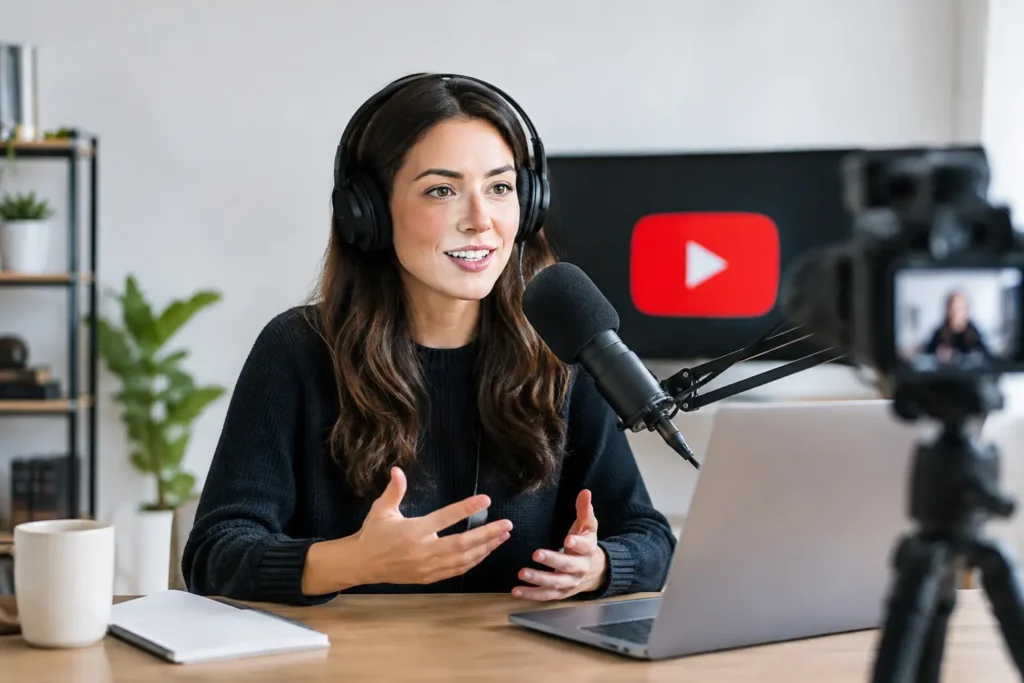
A podcast YouTube strategy gives a small business something most marketing channels struggle to create: time with your audience. A 30-minute conversation lets prospective customers hear how you think, what you value, and how you solve problems. For business owners who rely on trust, referrals, and local credibility, that is a meaningful advantage.
The opportunity is not simply to record a conversation and hope it finds an audience. YouTube is both a video platform and a search engine. When your podcast is planned around the questions customers already ask, each episode can support visibility, build authority, and create useful content for your website and social channels.
Why Podcast YouTube Content Works for Small Businesses
Most small businesses do not need millions of views. They need the right people to find them, remember them, and feel confident taking the next step. A thoughtful video podcast can help accomplish all three.
Unlike a quick social post, an episode gives you room to explain a complicated service, respond to common objections, introduce members of your team, or discuss changes in your industry. An electrician can explain why a breaker keeps tripping. A local retailer can talk through how to choose the right product. A consultant can break down a decision that often confuses new business owners. The conversation becomes proof of expertise without sounding like a hard sales pitch.
YouTube also gives episodes a longer working life. A social post may be missed within a day. A well-titled video about a specific customer question can continue appearing in search results months later. That makes podcasting especially useful for businesses willing to build their digital presence steadily rather than chase a single viral moment.
There is a trade-off, of course. A podcast takes more planning and production effort than posting a graphic. If your team cannot commit to a regular recording schedule, start with a limited six-episode season. Consistency matters, but a realistic schedule is more valuable than an ambitious plan that ends after two recordings.
Start With Customer Questions, Not Studio Gear
It is easy to get distracted by cameras, microphones, lighting, and elaborate sets. Quality production supports credibility, but the topic is still the reason someone clicks. Before buying equipment, list the questions your customers ask during calls, estimates, consultations, and sales conversations.
Look for questions that require more than a one-sentence answer. Those are strong podcast subjects because they allow your team to add context, examples, and practical advice. Topics such as “What should I expect during my first appointment?” or “How do I compare service quotes?” are more useful than broad, generic subjects with no clear customer benefit.
Your episodes can also feature people who already serve the same audience. A home service business might invite a realtor, insurance agent, or property manager. A wellness business could speak with a complementary local provider. These conversations can introduce your business to a relevant audience while giving viewers helpful, grounded information.
Keep the purpose of each episode clear. You may want to educate first-time buyers, strengthen local relationships, support an existing service page, or establish your founder as a trusted voice. One episode can do several things, but it should have one primary job. That focus makes the title, description, clips, and call to action much easier to create.
Build a Podcast YouTube Format Your Team Can Maintain
A dependable format reduces the pressure of recording. For many small businesses, a 20- to 40-minute interview or guided conversation is a practical starting point. That is enough time to provide substance without making the production process overwhelming.
Open with a clear promise. Tell viewers what they will learn and why it matters to them. Then move through a few prepared questions while leaving room for natural discussion. Close by directing the viewer to one useful next step, such as scheduling a consultation, contacting your team, or watching a related video. Avoid stacking several calls to action into the final minute. One clear action is easier to remember.
Visual consistency matters, even when the show is simple. Use a clean recording space, steady lighting, good audio, and an on-screen look that reflects your business. Viewers will forgive an imperfect camera angle sooner than distracting sound. If you must choose where to invest first, prioritize microphones and audio cleanup.
Your host does not need to sound like a broadcaster. The most effective business podcast hosts are often knowledgeable people who listen well, ask useful follow-up questions, and speak plainly. Customers are looking for clarity, not a performance.
Make Every Recording Do More Work
The full episode is only one part of the content. A productive recording can also create short video clips, quote graphics, email topics, blog ideas, and responses to frequently asked questions. This is where podcasting becomes a practical part of a larger marketing system instead of another task on your team’s list.
Choose a few moments during the conversation that stand on their own: a surprising insight, a clear answer to a common concern, or a concise story from real work. Edit those moments into short clips for social media. The clip should make sense even for someone who never watches the full episode, while still giving them a reason to do so.
You can also turn the conversation into written content. A discussion about choosing a contractor, for example, can inform a service-page update or an article that answers the same question in greater detail. This approach helps your team maintain a consistent message across YouTube, your website, and social media.
Help People Find Your Episodes
A great conversation can still underperform if viewers cannot tell what it is about. Treat the title, thumbnail, and opening lines as an invitation. They should clearly communicate the topic and the value of watching.
Use titles built around the language customers use. “What Oklahoma City Homeowners Should Ask Before Hiring an Electrician” is more helpful and searchable than “Episode 12: Talking Shop.” Episode numbers can be included, but they should not lead the title.
Your thumbnail should be simple enough to understand on a phone. A recognizable face, a few readable words, and a consistent brand style are usually enough. Avoid cramming in a full sentence or using imagery that promises something the video does not deliver.
Write descriptions that explain the discussion in natural language, including the services, locations, or customer problems that are genuinely relevant. Add timestamps when an episode covers several distinct subjects. They improve the viewer experience and let busy prospects jump directly to the question they care about.
Captions are also worth the effort. They make content more accessible, help people who watch without sound, and create a usable transcript of your conversation. Review automated captions before publishing, particularly for names, industry terms, and local places.
Measure Business Value, Not Just Views
Views are useful, but they are not the whole story. A niche business may get more value from 200 highly relevant viewers than 20,000 people who will never become customers. Look for signs that the content is reaching and helping the right audience.
Watch time can show whether your subject and opening are holding attention. Search traffic can reveal the questions people use to find you. Comments, direct messages, consultation requests, and mentions during sales calls often tell an even more useful story. Ask new leads how they found your business, and listen for people who say they watched an episode before contacting you.
If an episode has low views but brings a qualified inquiry, it may have done its job. If clips earn attention but full episodes lose viewers quickly, your team may need a stronger opening, tighter editing, or more focused topics. Use the data to improve the next recording rather than judging the entire strategy after one upload.
A podcast is not a shortcut to instant growth. It is a way to show up consistently with useful expertise, personality, and proof that your business understands its customers. With a realistic format and a plan to reuse each recording, your podcast YouTube presence can become one of the most credible assets in your digital marketing toolkit.
If you are ready to turn conversations into content but need help shaping the process, YoushTech can help your team create a practical production and promotion plan that fits your business. Start with the questions your customers already bring to you, then give those answers a place to keep working long after the conversation ends.