
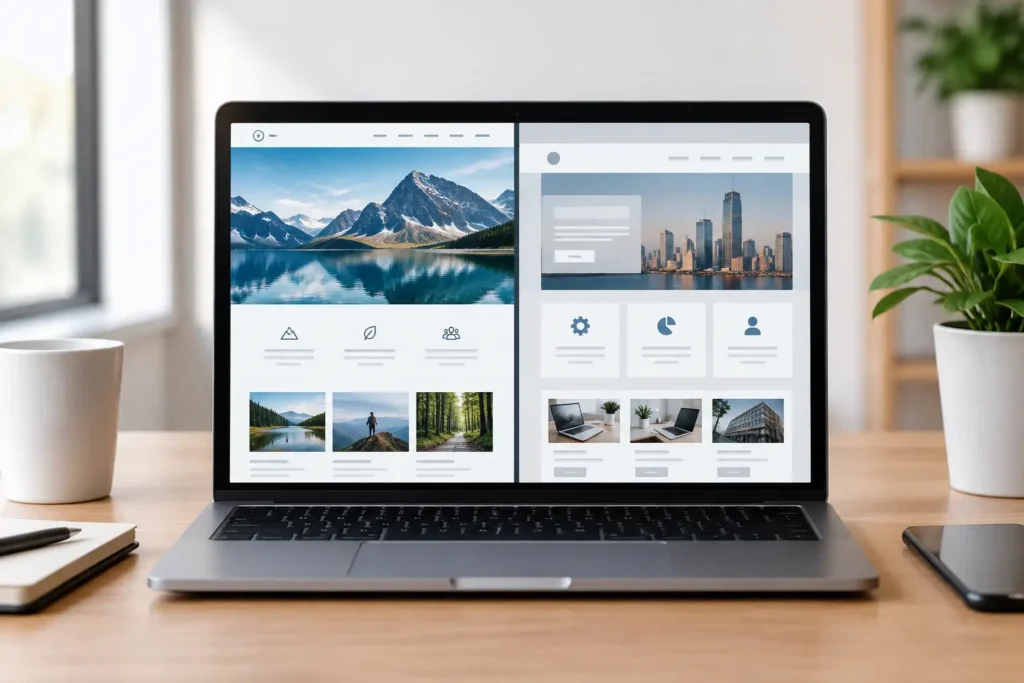
A website builder can have your business online by the end of the afternoon. That speed is appealing when you are opening a new location, launching a service, or replacing an outdated site. But the choice between custom websites versus templates is not simply about how quickly pages go live. It affects how clearly customers understand your value, how easily your team can market the business, and how well your site can support growth six months or three years from now.
For many small businesses, a template is a sensible starting point. For others, it becomes an expensive shortcut when it cannot support the way they sell, schedule, educate customers, or generate leads. The right answer depends on your goals, operations, budget, and willingness to invest in a digital foundation that fits your business.
What a Template Website Really Offers
A template website begins with a pre-designed layout inside a platform such as WordPress, Wix, Squarespace, Shopify, or another website builder. You select a design, add your logo, update colors, write page copy, and publish. Some templates are polished, mobile-friendly, and capable of supporting a professional-looking small-business website.
The strongest benefit is speed. A local service provider that needs a simple home page, service descriptions, contact form, basic photo gallery, and business hours may not need a complex build on day one. Templates also make the upfront cost easier to predict, especially if you are handling the updates yourself.
That said, a template is not automatically a strategy. It gives you a frame, not a clear message, a customer journey, or a marketing plan. If every page follows the same generic pattern as thousands of other sites, visitors may struggle to see why they should call your company instead of the next result in their search.
Where Templates Can Create Friction
Templates work best when your needs stay close to the features they were designed to handle. Friction starts when your business has a process the template was not built for.
An electrician may need service-area pages, emergency call prompts, estimate requests, financing information, and proof of licensing in the right places. A dispensary, medical-card business, or CBD company may need careful compliance language and a structure that helps customers understand product categories and policies. An eCommerce retailer may need product filters, subscriptions, inventory integrations, and a checkout experience that reduces abandoned carts.
A template can sometimes accommodate these needs through plugins or add-ons. The issue is not that add-ons are always bad. It is that each additional workaround can make a site harder to manage, slower to load, inconsistent in design, or vulnerable when the platform changes. What began as an affordable setup can turn into a collection of separate tools that no one on your team feels confident maintaining.
There is also a branding concern. A template can be customized, but there are limits to how much a pre-built structure can reflect your business. If your differentiator is personal service, specialized expertise, premium quality, or an uncommon buying process, a familiar layout may not give your story enough room to work.
Custom Websites Versus Templates: The Practical Difference
A custom website is designed around your business rather than asking your business to fit a pre-existing layout. That does not always mean building every feature from scratch. In many cases, it means strategically using reliable technology while tailoring the page structure, visual direction, content, calls to action, and functionality to your goals.
The practical difference appears in the questions asked before design begins. A custom project should look at who your ideal customers are, what they need before they contact you, which services drive the most revenue, what objections hold them back, and what action you want them to take. It should also consider how search visibility, social media, paid campaigns, and ongoing content will connect to the site.
For example, a door service company may need a site built around urgent calls, commercial and residential service paths, location-based search pages, and trust signals that make a homeowner comfortable calling. A professional engineering firm may need a more measured approach that highlights capabilities, project experience, certifications, and a clear path for qualified inquiries. Both businesses need a credible website, but they do not need the same customer journey.
Custom design gives your team more control over those decisions. It can prioritize the pages and functions that matter most, remove distractions, and create a system that is easier to expand when your services or marketing efforts change.
Cost Is More Than the Initial Price
Templates generally cost less upfront. That can make them the right choice for a business testing an idea, working with a limited launch budget, or needing a straightforward online presence quickly. A low initial investment is valuable when it helps you start serving customers sooner.
Custom websites require a larger upfront commitment because discovery, content planning, design, development, testing, and strategy take time. However, the upfront price should not be the only number in the decision. Consider the cost of rebuilding a template site after a year, paying for unnecessary apps, losing leads because visitors cannot find what they need, or spending staff time trying to solve technical problems.
The useful question is not, “Which option is cheapest?” It is, “Which option supports the next stage of our business without creating avoidable work?” A template that meets your needs can be a smart investment. A custom site that generates better leads, supports stronger campaigns, and remains useful as you grow can provide greater long-term value.
SEO Depends on Strategy, Not Just the Platform
Small-business owners often ask whether a custom site ranks better than a template. The honest answer is that either can rank in search results. Search engines care about helpful content, sound technical performance, clear page structure, relevance to the searcher, and a site that people can use easily on mobile devices.
A template does not prevent SEO success. But it may limit how efficiently you can build the content structure your business needs. Local businesses often benefit from dedicated service pages, location-focused content, well-organized navigation, fast loading times, accurate metadata, and clear conversion paths. If the template makes these tasks difficult, your SEO work becomes harder than it needs to be.
A custom website creates more room to plan for search from the beginning. Your pages can be organized around the services, locations, questions, and audiences that matter to your business. Technical elements can also be considered before the site is filled with plugins and patched-together features.
SEO is ongoing work either way. Publishing useful content, maintaining accurate information, reviewing performance, and improving pages based on customer behavior all matter after launch. Your website should make that work manageable for your team or your marketing partner.
How to Decide What Your Business Needs
Start with the role your website must play. If it primarily verifies that your business exists and gives customers a way to call, email, or visit, a thoughtfully selected template may be enough. Choose one that is mobile-friendly, easy to update, and not overloaded with visual effects you do not need.
A custom approach deserves serious consideration when your website needs to generate leads consistently, explain a complex service, support online sales, connect with business tools, serve multiple audiences, or stand apart in a competitive market. It is also a strong fit when you have outgrown an old site and know that patching it again will only delay a necessary rebuild.
Before approving either route, ask your team a few direct questions. Can customers quickly understand what we do? Can they take the next step without hunting for information? Can we add pages, campaigns, or features without starting over? Can someone reliably keep the site current? Your answers will reveal whether simplicity is an advantage or a limitation.
Build for the Business You Are Becoming
There is no prize for choosing custom development when a clean template would serve your current needs well. Likewise, there is no benefit in choosing the fastest option if it leaves your business with a site that cannot support sales, marketing, or customer confidence.
The best website decision comes from clarity about where your business is headed. A collaborative planning process can help you identify the right level of investment, prioritize what needs to happen now, and leave room for what comes next. YoushTech helps small-business teams make those choices with tailor-made guidance, so your website can become a useful part of the way you grow.