
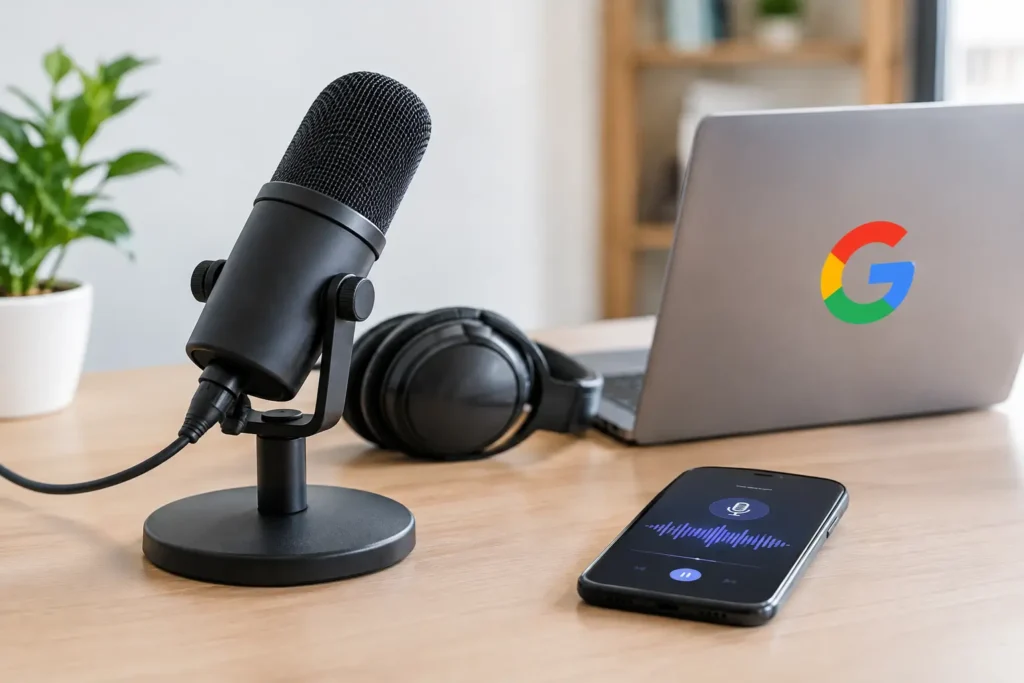
The phrase podcast Google used to mean one clear destination: Google Podcasts. For business owners and creators, that changed when Google retired the Google Podcasts app. The bigger opportunity did not disappear, though. It simply shifted toward YouTube Music, Google Search, and the content your podcast creates across your own website.
If your show supported your brand, generated leads, or gave customers a reason to trust your expertise, this change is worth addressing. A podcast should not rely on a single listening app. It should work as part of a connected digital presence that helps people find you, learn from you, and take the next step with your business.
What Happened to Google Podcasts?
Google Podcasts was discontinued in 2024, with Google encouraging listeners and creators to move toward YouTube Music. The transition created understandable confusion because Google Podcasts had been a familiar distribution point for many shows, while YouTube had traditionally been seen as a video-first platform.
For listeners, the main change was where they access podcast episodes. For creators, the more meaningful question is how they maintain visibility. If your podcast was distributed through a hosting provider and RSS feed, your episodes did not vanish when the app shut down. Your feed can still be submitted to and played through other podcast platforms.
What may have changed is your audience’s listening habit, your analytics workflow, and the places where people discover your content. That is why this is a good time to review your podcast strategy rather than treating the move as a simple platform swap.
Podcast Google Visibility Now Includes More Than an App
When people search for a local service, a business problem, or an expert answer, they often start with Google Search. A well-managed podcast can support that discovery process, but only when each episode has useful supporting content.
Google can understand more about your show when it has clear titles, descriptive episode pages, readable text, and a properly maintained RSS feed. YouTube Music adds another layer, especially for creators who can pair audio episodes with video, a simple branded visual, or clips designed for YouTube viewers.
This does not mean every business needs a high-production video podcast. A local contractor, consultant, retailer, or professional service provider may get stronger results from a focused audio show with helpful episode pages than from expensive studio production. The right approach depends on your audience, your available time, and whether video adds real value to the conversation.
Why YouTube Music Matters
YouTube Music is Google’s primary home for podcast listening. Podcasts can be available there through an RSS feed in eligible regions, and creators can also publish podcast content directly through YouTube.
The RSS option is practical when your show already lives with a podcast host. It can reduce duplicate work and help you keep one primary feed across listening platforms. Direct YouTube publishing can make more sense if video is central to your content plan or if your team wants to create short clips, chapters, thumbnails, and visual content around each episode.
Neither route is automatically better. RSS distribution supports efficiency. Native YouTube publishing can provide more creative control and stronger video discovery potential. Your team can also use both carefully, as long as episode naming, branding, and publishing schedules stay organized.
Start With Your Podcast Foundation
Before focusing on rankings or audience growth, make sure the basics are dependable. Your podcast host should provide a valid RSS feed, stable episode files, accurate show details, and analytics you can understand. Keep ownership of your hosting account, feed, artwork, and login credentials within your business whenever possible.
Your show title and description should explain who the podcast serves and what listeners can expect. A vague description such as “conversations about business” gives search engines and potential listeners very little context. A clearer description might identify your industry, service area, audience, and the practical topics you cover.
Consistency matters here, but it does not require weekly publishing. A monthly show with useful episodes is more sustainable than an ambitious weekly schedule that ends after six recordings. Set a cadence your team can maintain, then communicate it clearly to listeners.
Check These Distribution Details
A quick podcast audit should confirm that your feed is active and your show information is current across the platforms that matter to your audience. Focus on these essentials:
- Your RSS feed works and includes accurate episode titles, descriptions, artwork, and publishing dates.
- Your show is available on major listening platforms relevant to your customers, including Apple Podcasts, Spotify, and YouTube Music where appropriate.
- Your contact email, business name, website address, and social profiles are current.
- Your episodes have a clear category and language setting.
- Your podcast hosting and distribution accounts are owned by your business, not tied only to a former employee or outside contractor.
These details may feel administrative, but they protect work you have already invested in and make future marketing easier.
Turn Each Episode Into Searchable Business Content
An episode alone has limited search value if there is no supporting page for people to read, share, or revisit. Your website should give each meaningful episode its own home. This is especially useful for Oklahoma City businesses and service providers whose customers search for specific answers before contacting a company.
Create an episode page with a descriptive title, a short introduction, the embedded player or video, key takeaways, speaker information, and a simple next step. If the episode covers “how to choose a commercial electrician,” use that topic naturally in the page title and opening copy. Avoid trying to force every location or service keyword into the text. Clear, helpful language performs better for real readers and supports sound SEO practices.
A full transcript can be valuable, particularly for educational interviews and detailed discussions. It makes the content accessible to more visitors and gives search engines more context. However, raw transcripts can be difficult to read. Editing the transcript for headings, speaker labels, and obvious errors creates a better experience without changing the original conversation.
You can also add relevant structured data to your website, such as PodcastSeries and PodcastEpisode markup. This technical step helps search engines interpret the content, but it is not a promise of special search features or higher rankings. Think of it as clean labeling for content you already want customers to find.
Use YouTube Without Turning Every Episode Into a Production Burden
Many small-business podcasters hesitate at YouTube because they picture cameras, studio lighting, and extensive editing. Video can absolutely improve connection and credibility, particularly for interviews, demonstrations, and personality-driven shows. But it needs to fit your resources.
If you record video, prioritize clear audio first. Viewers will often tolerate a simple set or remote interview layout, but poor sound makes useful content hard to follow. Add a readable title, a useful description, chapters when appropriate, and a thumbnail that explains the episode topic quickly.
If you do not want to appear on camera for every episode, consider a polished static visual, recorded screen presentation, customer-approved photos, or supporting graphics. This is not always as engaging as an on-camera conversation, but it can give audio content a home in a video-driven ecosystem. The goal is not to imitate a large media company. It is to make your expertise easier for the right audience to access.
Short clips can extend the life of a longer episode on social media. A 30-second answer to a common customer question can introduce your perspective, while the full episode provides the deeper context. Choose clips that stand on their own instead of relying on an inside joke or a long setup.
Measure Results That Matter to Your Business
Downloads are useful, but they are not the only sign of podcast success. A smaller, focused audience can be more valuable than a large audience with no connection to your services. Look at website visits from episode pages, inquiry form submissions, booked consultations, email signups, video views, and conversations where prospects mention hearing the show.
Your goals should shape your topics. If you want to attract local customers, cover the questions customers ask before they hire you. If you want to build partnerships, invite complementary local professionals. If you want to establish authority in a specialized industry, use episodes to explain complex decisions in plain language.
YoushTech helps businesses connect content, search visibility, website performance, and video editing into a practical marketing system. Your podcast does not need to carry the whole marketing plan by itself. It can become one reliable part of a larger effort that keeps your business visible and credible.
The most useful next step is simple: choose one existing episode, give it a strong page on your website, confirm where it is distributed, and make it easy for a listener to contact your team when the conversation is over.