
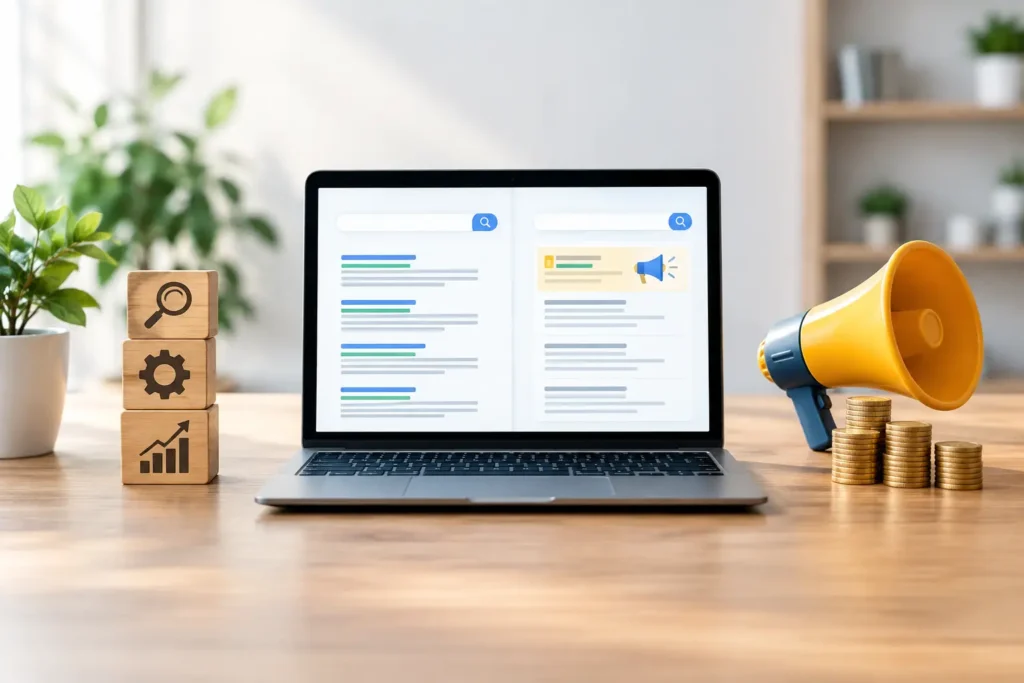
A homeowner in Oklahoma City searches for an emergency electrician at 8 p.m. A local retailer looks up wholesale inventory options. A prospective patient searches for a service near them. In each case, your business has a chance to appear at the exact moment someone needs what you offer. The question is whether SEO versus paid search is the better way to earn that visibility.
For most small businesses, the honest answer is not an either-or decision. Search engine optimization and paid search solve different problems. One builds durable visibility over time. The other can create immediate exposure when your team needs leads, sales, or data now. The right mix depends on your goals, budget, market, website, and how quickly you need results.
SEO versus paid search: the core difference
SEO is the work of improving your website so it has a stronger chance of appearing in unpaid search results. This includes technical website health, useful service pages, local business information, content, page speed, keyword strategy, and a clear experience for visitors. You do not pay Google for each click, but you do invest in the strategy and ongoing work required to earn and maintain rankings.
Paid search, often called pay-per-click or PPC advertising, places sponsored ads in search results. Your business chooses the terms it wants to target, creates an ad, sets a budget, and pays when someone clicks. Google Ads is the most familiar platform, though paid search can also include Bing and other search-based ad options.
The most visible difference is speed. A well-built paid campaign can begin bringing qualified visitors to your site shortly after it launches. SEO typically takes longer because search engines need time to crawl, understand, and trust your website compared with other relevant results.
That does not make paid search better. It simply makes it faster. SEO is often the channel that continues producing value after months of consistent work, while paid traffic generally stops when the budget stops.
When SEO makes sense for a small business
SEO is a smart long-term investment for businesses that want to become easier to find without paying for every visit. It is especially valuable when people regularly search for your core services, your service area, or questions related to your industry.
An Oklahoma City door repair company, for example, may benefit from pages that clearly explain residential repair, commercial service, emergency response, and the locations it serves. A customer searching for a specific need should land on a page that answers that need directly, not a generic homepage that leaves them guessing.
Local SEO is particularly useful for businesses serving a defined area. Accurate business listings, consistent contact information, customer reviews, location-focused pages, and a well-managed Google Business Profile all help search engines connect your company with nearby searchers. For a local operator, being found in the map results can be just as meaningful as appearing in standard organic listings.
SEO is also a strong fit when your business has expertise worth sharing. Educational content can attract people who are researching before they are ready to buy. A technology consultant might explain how to choose business software. An eCommerce company might create buying guides that answer common product questions. Over time, this content can support trust, attract relevant traffic, and give prospects a reason to return when they are ready to act.
The trade-off is patience. Competitive keywords do not move overnight, and poor-quality shortcuts can create more problems than progress. SEO works best when it is treated as a business asset, not a one-time task. Your website needs regular attention as your services, competitors, customer expectations, and search behavior change.
When paid search is the better move
Paid search is valuable when timing matters. If you have a new service, a seasonal promotion, an event, a limited inventory opportunity, or an immediate need for leads, advertising can put your offer in front of active searchers quickly.
It is also useful when organic rankings are still developing. A newer website may need time before it competes for high-value searches. Paid campaigns can help fill that gap, provided the campaign is thoughtfully built and the website gives visitors a clear next step.
A paid search campaign is not just a matter of choosing a few keywords and writing an ad. Successful campaigns require careful targeting, realistic budgets, relevant landing pages, negative keywords that block irrelevant searches, conversion tracking, and regular adjustments. Without those pieces, clicks can become expensive activity with little to show for it.
Consider a local service business advertising for a broad phrase like “repair near me.” That phrase may bring in calls, but it may also attract people looking for services the business does not offer, jobs, DIY instructions, or suppliers. Strategic campaign management reduces waste by narrowing who sees the ad and matching the message to the searcher’s intent.
Paid search also gives your team quick feedback. You can see which terms drive calls, form submissions, appointments, or sales. That information can shape your website copy, service priorities, and SEO plan. In that way, advertising can do more than generate leads. It can help you understand what customers actually respond to.
Cost is more than the monthly budget
Small-business owners often ask which channel costs less. The better question is which channel produces the most valuable results for your business over a meaningful period.
SEO requires an upfront and ongoing investment in your site, content, optimization, and local presence. The return may take time, but strong organic pages can generate visits and leads well beyond the month they were created. You are building a more useful, credible digital foundation at the same time.
Paid search offers more immediate control. You can adjust spending, pause a campaign, test a new message, or focus on a particular service area. But each qualified visit has a direct cost, and competitive industries can have high click prices. If your landing page is weak or your follow-up process is slow, you may pay for opportunities that never become customers.
Neither channel should be judged only by traffic. A hundred visitors who leave immediately are less valuable than ten visitors who call, request a quote, schedule a consultation, or make a purchase. Your team should measure results that connect to business goals, not just impressions and clicks.
Your website determines how well either channel performs
SEO and paid search both send people to your website. If that website is outdated, confusing, slow on mobile, or unclear about what you do, neither channel can perform at its best.
A useful landing page should make the next step easy. It needs a clear description of the service, a credible reason to choose your business, straightforward contact options, and calls to action that fit the visitor’s intent. Someone searching for urgent help may want to call. Someone comparing long-term service providers may prefer to request information or schedule a consultation.
This is where a coordinated strategy matters. Website design, content, SEO, advertising, and customer follow-up should support the same goal. Running ads to a page that does not match the ad’s promise creates frustration. Creating helpful SEO content without a clear conversion path leaves potential opportunities on the table.
A practical way to choose your starting point
If your business needs qualified leads quickly, start with a focused paid search campaign while improving the pages those ads visit. Keep the targeting specific, track calls and forms, and use real performance data to refine the campaign.
If your business has a limited ad budget but wants sustainable visibility, prioritize the SEO fundamentals: a professional website, accurate local information, service pages built around customer needs, and content that demonstrates your knowledge. This approach requires consistency, but it can strengthen your online presence from several directions.
If you have the capacity to invest in both, use paid search for immediate opportunities and SEO for long-term growth. Paid campaigns can test which offers and keywords convert. SEO can build on those findings through pages and content designed to earn ongoing organic visibility.
YoushTech approaches this decision as part of your larger digital journey, not as a standard package. The best channel mix should reflect how your customers search, what makes your business different, and what growth looks like for your team.
The next customer may be searching today. Give them a clear reason to find you, trust you, and take the next step.